
Screens vs. Scenography: Finding the Balance in Modern Events
In the race for digital impact, the events industry is facing a critical question: Are we letting technology eclipse the human message?
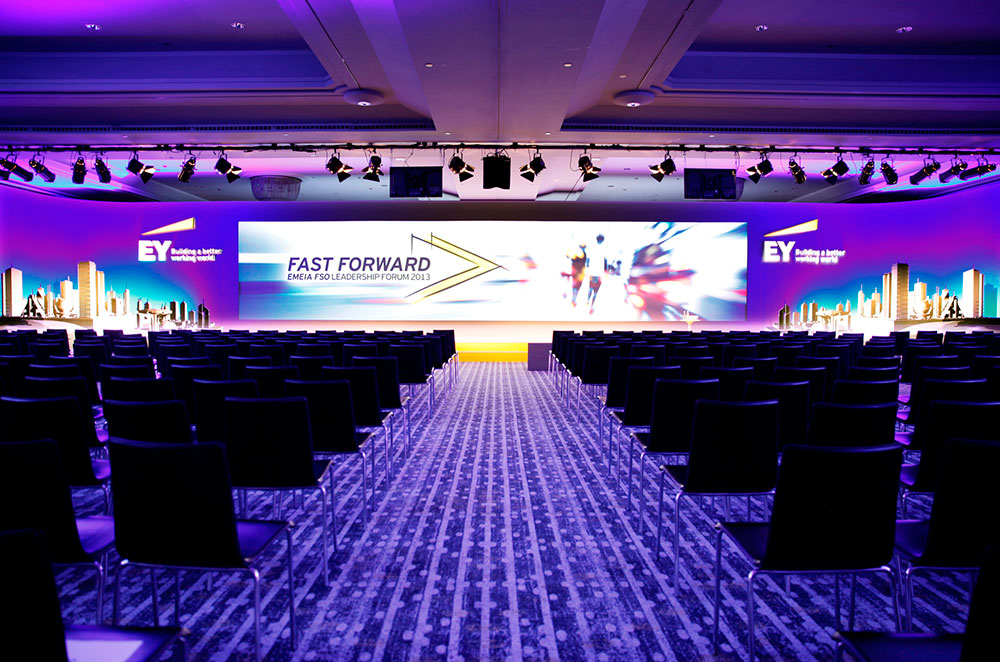
Walk into any major congress or corporate event today, and you are likely to see a massive high-resolution LED wall dominating the stage. While these tools offer incredible flexibility, a reliance on “pixels over physical design” is leading to a phenomenon known as digital fatigue.
As scenographers and event producers, our challenge at Saez Decom is not to reject technology, but to integrate it. The magic happens when we find the perfect equilibrium between the digital content and the physical environment.
1. The Biology of Attention (Cognitive Load)
The human brain is wired to follow light and movement. When a speaker stands in front of a giant, rapidly moving background, the audience’s cognitive load increases. They stop listening to the person and start watching the screen.
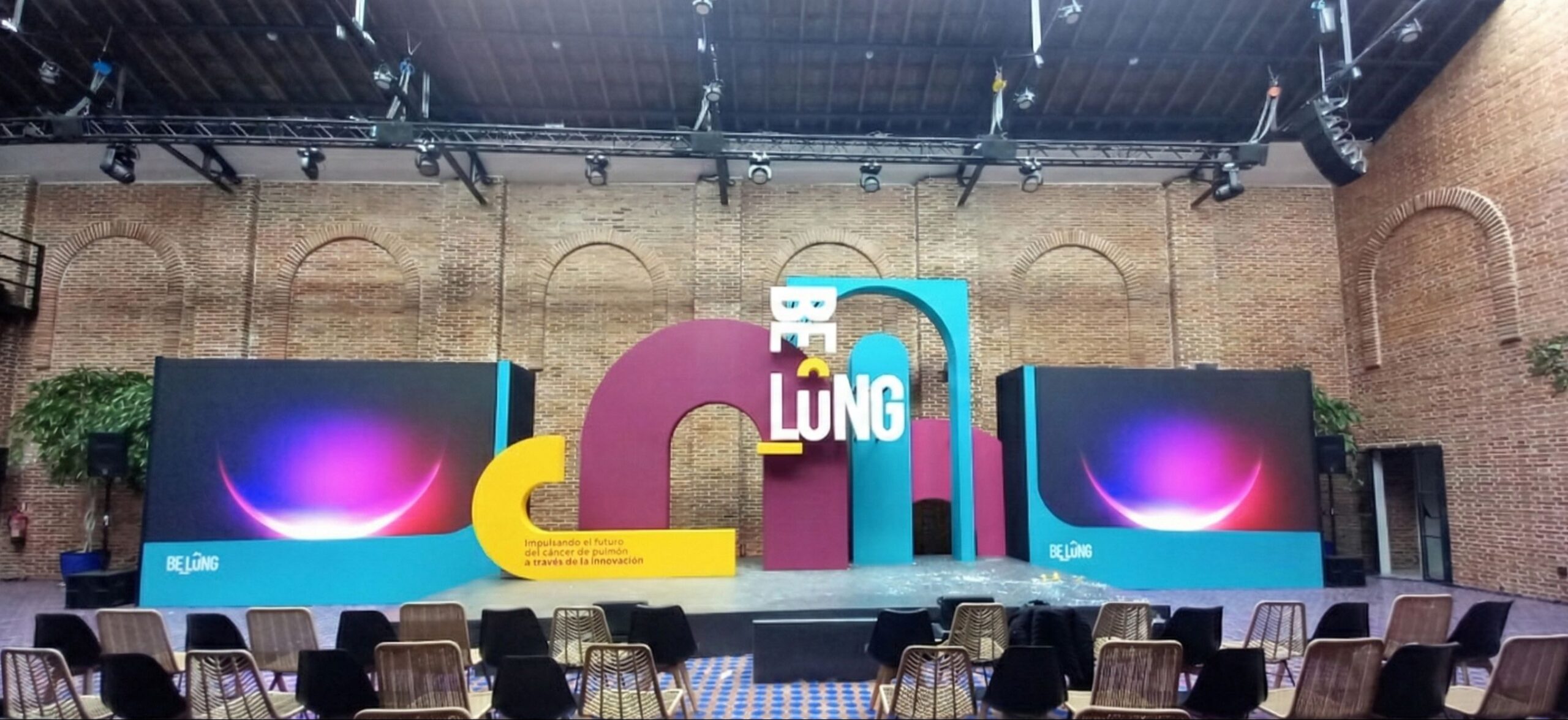
The Solution: Use physical scenography to frame the technology. Instead of a single massive wall, consider breaking the LED surface into columns or floating panels integrated into a wooden or textile backdrop. This allows the speaker to stand out against a calm, physical background while the screens support—rather than compete with—the narrative.
2. Texture is the New Luxury
We live our lives staring at flat, glass screens—phones, tablets, laptops. In a live event, the audience craves what they cannot get on Zoom: depth and texture.
Physical Warmth: A stage set built with real wood, textured fabrics, or architectural volumes offers a visual “rest” for the eye. It communicates quality and permanence in a way that a digital image never can.
3D vs. 2D: A screen is inherently two-dimensional. Scenography creates a three-dimensional environment that embraces the speaker, adding authority and presence to their message.
3. Lighting and Atmosphere
One of the hidden drawbacks of massive LED walls is light pollution. A giant screen emits so much light that it often washes out the stage lighting, making the speakers look flat or silhouetted.
By balancing the screen size with physical scenic elements (like Pipe and Drape or custom carpentry), lighting designers can regain control of the atmosphere. They can use shadows, spotlights, and color washes on the physical set to create emotional transitions that are far more theatrical and impactful than a simple slide change.
4. Sustainability: The Hidden Cost of Pixels
While digital is often perceived as “cleaner” than building a set, the energy consumption of a large LED wall is massive.
Energy Use: A 50m² LED screen can consume as much power in a few days as a household does in months.
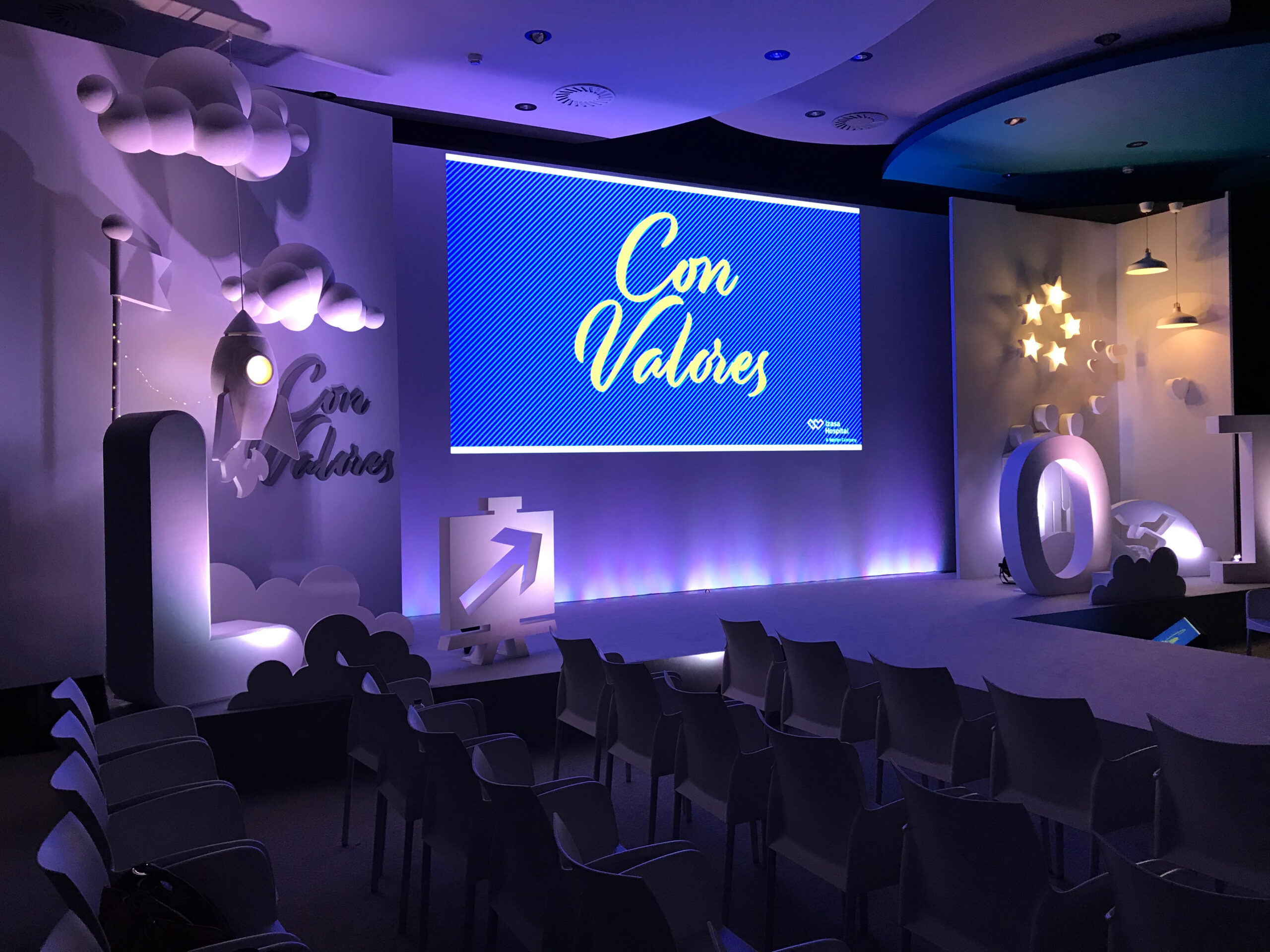
The Sustainable Alternative: Physical scenography built with FSC-certified timber or modular systems like beMatrix (which we use extensively) has a zero-energy footprint during the show. It reflects light rather than emitting it, offering a more eco-responsible approach to stage design.
Conclusion: Technology as an Ingredient, Not the Meal
At Saez Decom, we love technology. We love how it allows us to change branding instantly or transport an audience to a different world. But we believe technology should be an ingredient in the recipe, not the entire meal.
The most memorable events of the future will be those that master the hybrid: the perfect blend of digital dynamism and physical, tactile reality.
Looking for a balanced stage design?
We specialize in integrating high-tech AV with bespoke carpentry and modular structures. Let’s design a stage where your message stands out.